Showing posts with label Mexico. Show all posts

Friday, October 28, 2011

What did the Maya know?

Wisdom Quarterly


The Maya or Mayans knew one thing for sure. The Ages change. And this one is coming to an end. As of today, or perhaps December 21, 2012, we transition from one to another. This is the dawning of the Age of Aquarius.

There is great astronomical and astrological significance in this. But few of us now regard the significance of astronomy in our lives, and astrology has been made a pop media joke. There is significance. We are separate from space. We are in space. This is a space world. It is visited by other space worlds. It is influenced and influences other space worlds.

The Maya were told that and taught various calendars and synchronaries. The days of the week, the phases of the Moon (which is the Earth's timepiece once so valuable to everything we did that the powers that be -- other space or subterranean entities -- could not stand for it and obscured it as evil and replaced it with worship of the Sun, which also was always important), the days to undertake an endeavor.

We laugh. How naive of our forest-dwelling forbears who somehow built monoliths and observatories, pyramids and spiritual centers (all with aid from above). Never mind that all over the world similar groups did the same thing, from Egypt to Cambodia, from Sumeria to India, from Easter Island to Stonehenge, from unknown site to unknown site. These sites are everywhere.

The world will end, guaranteed.

But it will spring up again. That is certain.

If we fear change, we will always live in fear, because change is the only constant.

What can we do?

We suggest we work out our liberation (salvation, emancipation, improvement) with diligence. We'll see you in heaven, in paradise, in good states supported by the profitable karma willed, performed, and accumulated right NOW. And for a few all praise is due, who confirmed that it is possible right here, right now, in this very life: Nirvana is visible within samsara. They are not the same thing.
  • Be the Change: Occupy Together
  • Buddhism in ancient America
  • Rick Fields' book will remain as the first attempt to document the Buddhist movement in America. There are approximately eight hundred persons and places named in the book, from Shakyamuni, who started it all, through to the Tibetans, Koreans, Vietnamese, Japanese, Sinhalese, Chinese, and a plethora of Westerners. It's a fascinating story full of eccentric characters, good intentions, and unstinting effort....Buddhism's migration to the new lands....

Sunday, July 17, 2011

Buddhism in Mexico (Budismo)

Wisdom Quarterly and Budismo.com


America is not synonymous with the United States, although we use it that way. America is a continent with northern, central, and southern sections. The economic dominance of one part of the north has led to US hegemony (social influence) and military control and distorted the world's view of Americans. Mexico is just to the south of the US because the US stole many parts of Mexico including world-famous California. Just as Buddhism intrigues US citizens, citizens of Mexico and the rest of the Americas are embracing the Dharma. Of course, Buddhism in ancient Mexico and Mesoamerica goes much further back than it does in the US. Particularly striking is the Eagle-men versus Snake-men warring, popular in both Aztec and Buddhist mythology and central to the founding of Mexico and its flag. And there is also the adoration of GuanYin/Guadalupe. Budismo en espanol is no longer limited to Spain.


Budismo General
Más de la mitad de la población mundial vive en países que han recibido una gran influencia de las ideas y prácticas budistas. Sin embargo, desde los tiempos de Buda -- quinientos años antes de la aparición del cristianismo -- hasta mitad del siglo XX en Occidente no se sabía casi nada acerca del Budismo.

El Budismo se extiende a occidente
No obstante, a mediados del siglo XX esta situación empezó a cambiar, y se dice que hoy en día el budismo es una de las religiones que con más rapidez se extiende en Occidente.

El Budismo
¿Qué es el Budismo? Normalmente consideramos que la religión es creer en Dios, o mejor dicho, en creer en cualquiera de sus manifestaciones divinas; sin embargo, en el Budismo no se habla de Dios alguno. Mas


VALLE DE BRAVO, Mexico - In December 2010, a longtime dream of H.E. Yongdzin Tenzin Namdak Rinpoche was realized with the internal consecration of the Great Stupa for World Peace at the Chamma Ling retreat center, Mexico.

This huge, sacred structure represents all paths to enlightenment. It is hoped that its presence will help remove obstacles and discord and bring peace and happiness to Mexico and the world.

Among the hundreds of participants at the consecration were Yongdzin Rinpoche, the most senior teacher of the Bon Buddhist tradition of Tibet.

Also in attendance were Khenpo Tenpa Yungdrung Rinpoche, abbot of Triten Norbutse Monastery in Kathmandu, Nepal; Geshe Tenzin Wangyal Rinpoche, spiritual director of Ligmincha Institute; Bon Buddhist masters; representatives of other Buddhist traditions; as well as local native shamans. Video edited by Enrique Garcia.
Spanish Buddhism

Friday, June 24, 2011

View inside an ancient Mayan tomb

Exterior view of tomb of Mayan ruler at the ruins of the Mayan city of Palenque in the hills of the southern Mexican state of Chiapas (INAH/Reuters).

A tiny remote-controlled camera peered inside the tomb that had been sealed for 1,500 years, revealing red frescoes, pottery, and pieces of a funerary shroud made of jade and mother of pearl. Archeologists had not been able to access the vault discovered in 1999 inside a Mexican pyramid among the ruins until now, the INAH said in a release on Thursday. More


Tiny camera reveal early Mayan tomb
Researchers said Thursday that a tiny remote-controlled camera lowered into an early Mayan tomb in southern Mexico has helped reveal an intact funeral chamber with offerings and red-painted wall murals. The tomb was discovered in 1999 inside a pyramid among the ruins of the Mayan city of Palenque in the hills of the southern Mexican state of Chiapas.

Mexico City – Mexican archaeologists have found a new ballplayer monolith dating from between 900 A.D. and 1000 A.D at an archaeological site in the north-central state of Zacatecas, INAH said.

Maya offering found in Cenote, near Chichen Itza
The offering contains human bones of at least six individuals, probably sacrificed during a pair of intense dry season periods, one nearly 1200 years ago and the other, 900, as well as ceramic vessels; jade and shell beads; flint and double leaf knives, shell round artifacts that might have been Tlaloc goggles, animal bones, and a great amount of charcoal probably used during the ritual.

Friday, May 6, 2011

Amazing Buddha statues around the world

Like every great religion, Buddhism has inspired some of the most beautiful and spectacular art in the world. Notably, the desire to make wholesome karma has taken the form of statues. They adorn Buddhist temples, hillsides, and peaks. Here are the Huffington Post's picks of 11 amazing and enormous Buddha statues from around the world.


Monywa Buddhas, Burma


Tian Tan Buddha, Hong Kong


Hussain Sagar Buddha, Hyderabad, India


Wat Mahathat Buddha Head, Ayutthaya, Thailand


Wat Pho Reclining Buddha, Bangkok, Thailand


Gal Gal Viharaya, Polonnaruwa, Sri Lanka


Temple of the Emerald Buddha, Bangkok, Thailand


Leshan Giant Buddha, Sichuan, China


Bamiyan Buddha, Afghanistan (destroyed by Taliban)


Wat Si Chum, Sukhothai, Thailand


Wat Theppitak Punnaram, Nakhon Ratchasima, Thailand


Korean Monastery Buddha


Buddha in Mexico


Ushiku Daibutsu, Japan


Great Buddha of Kamakura, Japan

Thursday, May 5, 2011

Buddhism in Mexico before Christianity

Xochitl, Wells, MacPherson (Wisdom Quarterly, Cinco de Mayo edition)

Nowhere in America is the 5th of May more popular than Los Angeles -- gateway to Tijuana, Baja, Cancun, and the pyramidal wonders of [pre-drug war] Mexico.

Every Mariachi band is booked months in advance, in spite of the fact that no right minded Chicano (Mexican-American) would ever listen to such a cacophony at any other time of the year. Restaurants make matador's killing in selling liberation and independence to Caucasians egging on their Hispanic friend's bad habit of drinking Dos Equis ("XX") corporate brew and such strange and wonderful cuisine:
  • nachos (a corn chip dish with microwaved cheese-like substance)
  • tacos (anything wrapped in a corn shell or tortilla, roughly a "sandwich")
  • burritos (anything wrapped in a wheat flour shell, roughly a compact mess)
  • salsa (anything tangy, spicy, and minced)
  • and, of course, chimichangas (deep fried and unhealthy)
The fact is most Americanized "Mexican" food, while recognizable to Mexicans, is about as authentic as Americanized "Chinese" food, which is original enough to be sold in Asia as American-Chinese food with even Chinese and Koreans scratching their heads. We're a land of innovation, after all. I mean, we invented pizza here. That was never found in Italy before someone in New York concocted it. But food brings us together.


The Buddha in Mexico in the shape of our headless Zen figurine, but in the "Buddha Bar"

My big Mexican family is not Buddhist but nominally Catholic. (It's the duty of every Mexican mother to be as Catholic as every Irish mother, as guilt-inspiring as every Jewish mother, and as warmhearted as every Midwestern farmer). It's the culture. Here's a hug!

Growing up I always admired the headless Zen Buddha and Japanese Virgin Mary figurines my mom had in the living room. We'd glue the head back on, but it would always comes off again. When I was old enough to realize it was "the Buddha" and Gwan Yin, I was overjoyed that my mom was so liberal. She inadvertently introduced me to Buddhism!

She swore blind that that might well be the Buddha (who could tell without a head?) but there's no way that wasn't the Virgen de Guadalupe. When I explained Kwan Yin and the worldwide manifestation of the divine feminine and Mother Goddesses, she was satisfied that that was close enough. That's what happens when you shop in nearby China Town and buy things that look familiar.

Well she was positively stunned when I showed her evidence that Buddhism preceded the arrival of Catholicism to Mexico and Mesoamerica by centuries. NO WAY, she insisted. "Everybody" knows the Mexicans were all born Catholic.

Tibetan wanderers, who might have first crossed the Bering Straits land bridge 30,000+ years ago to establish the Eskimo and North American native "Indian" populations, now go as missionaries to Mexico.

Of course, the truth of the matter is that we were once proud Native Americans, caretakers of the Earth, and astro-theological admirers of feathered dragons from space (nagas and devas, apparently) -- just like East Indians, Khmer Cambodians (whose great jungle empire built the civilization anchored in the enormous metropolis of Angkor and Angkor Wat), early Europeans, and the amazing Dogon Africans.

But more amazing is the history of Buddhism in America Rick Fields uncovered in his tremendously influential, but largely unacknowledged (because it's unacceptable and turns everything we think upside down) book:

(Shambhala, Boston/London, 1992)

How the Swans Came to the Lake:
A Narrative History of Buddhism in
America

But generally few care what American historians say. Moreover, no one wants to know how clean, civilized, and cultured the indigenous peoples were when colonists from Norway (Vikings), France, Spain, Portugal, and johnny-come-lately England arrived in the future United States to label them "savages," "heathens," and kill them to save them with the hypocritical Word of the Lord God, smallpox, private property, free trade, and so on. (Reading Howard Zinn, Noam Chomsky, and other obscure uncoverers of the unpopular truth might teach one this much).
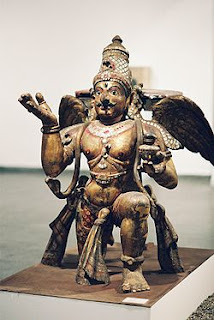
Mexico was established where the garudas symbolically slayed the nagas, Eagle beings versus Serpent beings leading to the symbolism of the Mexican flag.

But the pre-Mexican cultures that culminated in Mexico (Aztecs, Mayans, Olmecs...) have seen their memory largely wiped out or sanitized by Christian conquistadores (genocidal "conquerers").

Mexico was once an unexplained marvel with pyramids and connection to the "gods" (devas arriving from space and imparting advanced knowledge).

Now it's a good place to import and export drugs, undermined by our CIA, its leaders deposed and friendly politicians installed and manipulated. Sadly, it's no longer safe to travel to as a haven of college drinking and debauchery streaming in from Texas and [upper] California. California was Mexico until the 1850s.


But what does historian Rick Fields add to the strange and wonderful history of the Americas pre-Spanish Catholic conquest? The nub of the story is that Asian Buddhist monks set out on a boat and were blown far, far off course, eventually landing on the other side of the Pacific rim, on the coast of this continent. They shared the advanced technological knowledge they had with the native peoples and revolutionized ceramics, language, art, culture, and philosophy.

Many place names are echoes of the religion they brought with them: Gautama (the Buddha's surname) and mala (necklace) combined to form the name Guatemala. Maya (the Buddha's mother's name, as well as a popular Eastern Philosophical term for "illusion" or "beauty") may have formed the basis of the Mayan culture.

There are, of course, Tibetan Buddhist (Vajrayana) centers in Mexico. Mahayana missionaries have also gone in, either because Gwan Yin is so recognizable to "Virg Yin" (Mother Mary) lovers or because the missionary zeal of Christianity is rooted in the missionary manner of spreading the Buddha established. Theravada, the oldest extant form of Buddhism, is being spread in Mexico as well.

One of the few African American Theravada Buddhist monks in the world is from Los Angeles. He now divides his time between Sri Lankan and Vietnamese traditions. But he is living and spreading the Buddha-Dharma in the most dangerous city in the world, Ciudad Juarez near El Paso at the Texan-Mexican-American border. He is a great friend of Wisdom Quarterly and will be interviewed when he next returns to Los Angeles.

The more things change, the more they stay the same: So happy Cinco de Mayo from the again increasingly Buddhist and Mexican City of Angels!

Cinco de Mayo more popular in US than MX

Luis Perez (St. Petersburg Times via Seattle Times edited for Wisdom Quarterly)
It's Cinco de Mayo today, Thursday, May 5. Perhaps you're heading to a local stand to munch on veggie tacos and throw back salt-rimmed virgin margaritas with lots of fresh lime.

But does anyone know the history behind the multicultural party?

Cinco de Mayo ("5th of May") commemorates the day in 1862 when the Mexican army fought back and defeated the French army in a David-and-Goliath-like battle.

That year, Napoleon III invaded Mexico ostensibly to collect money "owed" colonial master France. Historians say Napoleon really wanted to take over his enemy, the United States. Pres. Lincoln was busy with the Civil War and did not get involved in the ensuing fight near Mexico City.

The Battle of Puebla lasted two hours. The Mexican army, led by Gen. Ignacio Zaragoza, was 4,000 strong. The troops wielded machetes and ingenuity to defeat Napoleon's better-equipped force of 8,000 soldiers, or so the glorified war story goes.

For Mexican-Americans, who make up more than 10 percent of the nation's population [a number that is growing due to blending so that nearly everyone has a spouse, relative, or significant other who is at least part Hispanic, as suggested by the 2010 US Census], Cinco de Mayo is a holiday that stokes national pride. [And it shares in small part the Francophobia we as American inherited from our English cultural forbears].

But many Americans mistakenly believe the holiday is Mexico's Independence Day. That actually falls in September. Full story